A kitchen, bathroom, or addition project is one of the biggest investments you will make in your home, and the contractor you hire shapes every part of the experience, from the first design conversation to the moment you see what is behind the drywall once someone opens a wall. A good contractor selection guide helps you compare qualifications, communication style, scope, pricing, and contract terms so your renovation starts on solid ground. Use the steps below as practical home improvement advice for protecting your budget, your timeline, and your peace of mind, whether you live in Montgomery, Chester, or Bucks County.
How do you find a home remodel contractor you can trust?
You find a trustworthy home remodel contractor by starting with reputable referrals, checking credentials, comparing detailed written bids, and asking direct questions about process, permits, communication, and problem-solving. The goal is not simply to find someone available. It is to find a qualified professional whose experience matches your project and whose proposal is specific enough to hold both sides accountable.
Begin by defining your remodel clearly. A kitchen remodel, bathroom renovation, home addition, or whole-home project may require different experience, trades, permitting, and scheduling. The clearer you are about your goals, must-haves, budget range, and timing, the easier it is to spot contractors who are truly prepared for the job.
Good sources include people you personally trust, local builders and remodeling associations, community recommendations, the Better Business Bureau, and vetted online platforms. Referrals are helpful, but they are only a starting point. Even if a contractor did great work for a neighbor, you still need to verify registration, insurance, references, and fit for your specific scope.
Start with a clear project scope
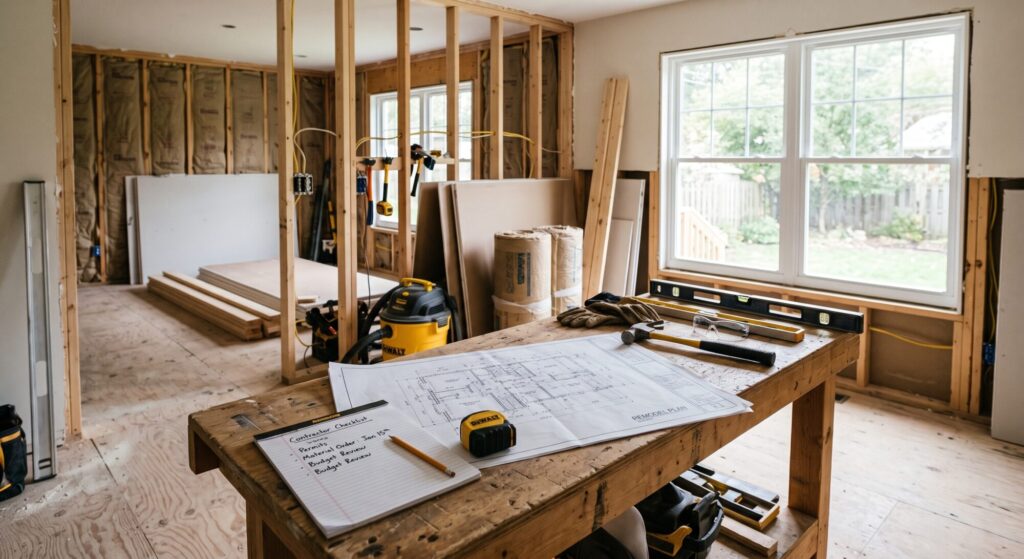
One of the most useful home renovation tips is to write down what you want before you contact contractors. You do not need final drawings for every project, but you should have enough detail to request comparable bids. If one contractor prices custom cabinetry, another prices stock cabinets, and a third leaves cabinets as an allowance, the bids will look similar on the surface but mean very different things.
Your initial scope should include the rooms involved, the problems you want solved, preferred materials or finishes, known structural or plumbing concerns, and any firm deadlines. Include what you do not want changed, too. Keeping the existing layout in a bathroom is very different from moving drains, electrical, and walls.
Is a design-build contractor better than a general contractor?
A design-build contractor is often the better fit for kitchens, bathrooms, and additions because design, budgeting, and construction are managed by one team under one agreement. That means one point of contact, fewer handoffs between a designer and a builder, and cost conversations that happen while the design is still taking shape rather than after plans are finished.
A traditional general contractor can also be a strong choice, especially when you already have plans from an architect. In that case, be clear about who coordinates design decisions, who approves changes, and who is responsible when the drawings and the field conditions do not match.
At Volpe Design Build, the design-build approach is the foundation of how we work. Our goal is to deliver seamless, personalized, and high-quality renovations and to build lasting relationships with the homeowners we serve. We call it being a Client for Life.
Build a shortlist from reliable sources
A strong shortlist usually includes three to five contractors who work on projects similar to yours. Avoid hiring the first person who replies quickly just because you are eager to begin. Availability matters, but responsiveness at the inquiry stage is only one piece of the decision.
Use a mix of referral sources so you are not relying on one opinion:
- Friends, family, and neighbors: Ask what the contractor did well, what was difficult, and whether the final cost changed significantly.
- Local professional associations: These can help you identify established remodelers in Southeastern Pennsylvania.
- Online reviews: Look for patterns over time, not one glowing or angry review.
- Past project photos: Compare the contractor’s work with your style, project size, and expected level of finish.
- Local permitting familiarity: Contractors who regularly work in your township or borough better understand local inspection and documentation requirements.
What should Pennsylvania homeowners check before hiring a remodeler?
In Pennsylvania, most home improvement contractors must be registered with the Office of Attorney General under the Home Improvement Consumer Protection Act. Ask for the contractor’s registration number, which should appear on contracts and advertising, and confirm it using the state’s online lookup. Specialty work such as electrical, plumbing, and structural changes may also require permits and inspections through your local municipality.
Do not assume a contractor is properly authorized simply because they have a website, a truck, or a social media page. Registration rules and municipal requirements can change, so verify directly with the state and your township before you sign.
Verify credentials before you fall in love with the proposal
Credentials are not glamorous, but they are where smart contractor hiring tips become real protection. Ask each contractor for proof of state registration, general liability insurance, and workers’ compensation coverage if they have employees or subcontractors. Request copies of certificates, then confirm they are current instead of taking a verbal promise.
If permits are needed, clarify who will pull them and whose name will be on the permit. In most cases, your contractor should handle this.
References deserve more than a quick glance. Ask for recent clients with projects similar to yours, then ask specific questions:
- Was the jobsite kept reasonably clean?
- Did the contractor communicate schedule changes?
- Were change orders documented?
- Did the final result match expectations?
- Would they hire the same contractor again?
Get written bids you can actually compare
Aim for at least three written bids with a detailed, comparable scope. A useful bid should break down major materials, labor, allowances, timeline expectations, payment schedule, and exclusions. If a proposal is vague, it may create confusion later when both sides remember the conversation differently.
Price matters, but the cheapest bid is not automatically the best value. A low bid can reflect efficiency, but it can also mean missing scope, unrealistic allowances, underpriced labor, or an expectation that costs will rise through change orders. A much higher bid is not automatically better either. Ask what is included that others left out.
Use this quick comparison checklist when reviewing proposals:
- Does each bid cover the same rooms, materials, and level of finish?
- Are demolition, disposal, cleanup, and protection of existing surfaces included?
- Are permits, inspections, and code-related updates addressed?
- Are allowances realistic for the quality you expect?
- Does the bid identify what is excluded?
- Is there a clear estimated start date, duration, or scheduling process?
- Are payment milestones tied to completed work rather than vague calendar dates?
This is where your written scope becomes powerful. When each contractor prices the same work, you can compare judgment, communication, and professionalism instead of guessing what the numbers mean.
What questions should you ask before hiring?
Ask questions that reveal how the contractor manages real-world renovation problems, not just whether they can “do the job.” A remodel often involves hidden conditions, delayed materials, inspection requirements, and daily disruption, so you want to understand the contractor’s process before work begins.
Good questions include:
- Have you completed projects like this recently? Ask for examples that match your project size, the age of your home, and its complexity.
- Who will be on site each day? Clarify whether you will work with the owner, a project manager, a lead carpenter, employees, or subcontractors.
- How do you handle change orders? Changes should be priced and approved in writing before extra work proceeds whenever possible.
- What is your communication routine? Weekly updates, shared schedules, and one point of contact can prevent frustration.
- How do you protect the home during construction? Dust control, floor protection, security, and cleanup matter when you are living through the project.
- What could delay this job? A thoughtful answer shows experience and honesty.
- How are disputes handled? The answer should align with the contract, not depend on goodwill alone.
Listen for clarity. A reliable contractor may not promise that nothing will ever go wrong, but they should be able to explain how issues are documented, priced, scheduled, and resolved.
Watch for red flags early
Red flags do not always mean a contractor is dishonest, but they do mean you should slow down. Remodeling is too expensive and disruptive to proceed when basic trust signals are missing. If something feels rushed, unclear, or evasive, ask for clarification in writing.
Be cautious if a contractor:
- Pressures you to sign immediately or says a price is only good “today.”
- Cannot provide a Pennsylvania registration number, proof of insurance, references, or a written contract.
- Requests a very large upfront payment before materials are ordered or work begins.
- Offers a bid that is dramatically lower without explaining why.
- Uses vague language such as “standard materials” without defining the standard.
- Wants you to pull permits in your own name without a clear reason.
- Avoids discussing inspections, warranties, cleanup, or change orders.
- Communicates poorly during the sales process, then promises communication will improve later.
The early relationship often predicts the construction relationship. If a contractor misses appointments, sends incomplete information, or becomes defensive when you ask normal questions, that pattern may continue once your home is under construction.
Put the agreement in writing
A solid contract is one of the most important tools for protecting both homeowner and contractor. It should clearly describe the scope of work, materials, allowances, payment terms, estimated schedule, permit responsibilities, insurance requirements, change order process, cleanup expectations, warranty information, and dispute resolution steps. If something matters to you, it belongs in the contract or an attached document. Pennsylvania law also sets requirements for what home improvement contracts must include, along with a cancellation window for homeowners, so a professional contractor should walk you through those terms.
Avoid relying on handshake agreements or text-message summaries for major decisions. A friendly relationship is valuable, but memories fade and circumstances change. Written terms reduce confusion and make it easier to resolve disagreements professionally.
Payment terms deserve careful attention. Avoid paying in full before the work is complete, and be cautious with unusually large deposits. A common best practice is to use progress payments tied to milestones, such as completion of demolition, rough-in inspections, drywall, or substantial completion. Holding a final payment until agreed work is finished gives you leverage to address punch-list items.
Manage the relationship after work begins
Hiring well is only the beginning. Once the remodel starts, your role shifts from shopper to active project participant. You do not need to micromanage skilled trades, but you should stay engaged, respond quickly to decisions, and keep records of approvals.
Set a communication rhythm early. Weekly check-ins, written updates, or a shared project log can help everyone track decisions and open items. If you approve a different tile, move a fixture, or add lighting, ask for the cost and schedule impact before work proceeds.
Keep a simple project folder with the contract, permits, insurance certificates, drawings, selections, invoices, receipts, change orders, and messages. This organization is not just administrative. It helps prevent misunderstandings and gives you a clear history if questions arise.
A simple contractor selection guide for homeowners
Use this decision matrix when you are comparing your top candidates. You may not find perfection in every category, but the strongest choice should perform well across most of them.
| Selection factor | What to look for |
|---|---|
| Relevant experience | Similar project type, home age, budget range, and complexity |
| Credentials | Pennsylvania HIC registration, insurance, and workers’ compensation |
| Proposal quality | Detailed scope, realistic allowances, clear exclusions, and written timeline expectations |
| Communication | Prompt replies, direct answers, organized follow-up, and a clear point of contact |
| References | Recent clients who confirm reliability, quality, cleanliness, and follow-through |
| Contract terms | Clear payment milestones, change order process, warranty details, and dispute terms |
| Professional fit | Respectful, transparent, and comfortable to work with during a stressful project |
If two contractors seem equally qualified, choose the one who communicates better and documents details more clearly. Renovation involves constant decisions, and a contractor’s process can matter as much as craftsmanship when your home, money, and schedule are involved.
Frequently asked questions
How many contractor bids should I get for a remodel?
Most homeowners should get at least three written bids based on the same project scope. This makes it easier to compare value, spot missing items, and understand each contractor’s approach.
What is the difference between design-build and hiring a general contractor?
With design-build, one company manages design, budgeting, and construction. With a general contractor, you typically hire a designer or architect separately and then hire a builder to execute the plans.
How do I check if a contractor is registered in Pennsylvania?
Ask for the contractor’s Home Improvement Contractor registration number and verify it through the Pennsylvania Office of Attorney General’s online registration search.
Should I pay a contractor the full amount upfront?
No. Payments should generally be tied to completed milestones, with a final payment held until the agreed work and punch-list items are finished.
Ready to start your remodel with Volpe Design Build?
The best way to find a home remodel contractor is to slow the decision down before the work speeds up. Define your scope, gather multiple written bids, verify credentials, ask practical questions, and insist on a clear contract with sensible payment milestones. With the right preparation, you can move into your renovation with more confidence, fewer surprises, and a stronger working relationship from day one.
If you are planning a kitchen remodel, bathroom renovation, or home addition in Montgomery, Chester, or Bucks County, Volpe Design Build is ready to help.