For many homeowners, the tub is the centerpiece of a primary bathroom. For others, it is the fixture they never use. If you are planning a primary bathroom remodel in Montgomery, Chester, or Bucks County, choosing the right tub, or deciding whether you need one at all, shapes the entire layout. Here is a guide to the most popular tub options and how to choose between them.
What type of tub is best for a primary bathroom?
The best tub for a primary bathroom depends on your space and how you plan to use it. Freestanding tubs make a design statement in larger rooms, alcove tubs fit efficiently between three walls and can include a shower, drop-in or undermount tubs offer a built-in look with a surrounding deck, and deep soaking tubs provide comfort for relaxation. Some homeowners skip the tub entirely in favor of a larger shower.
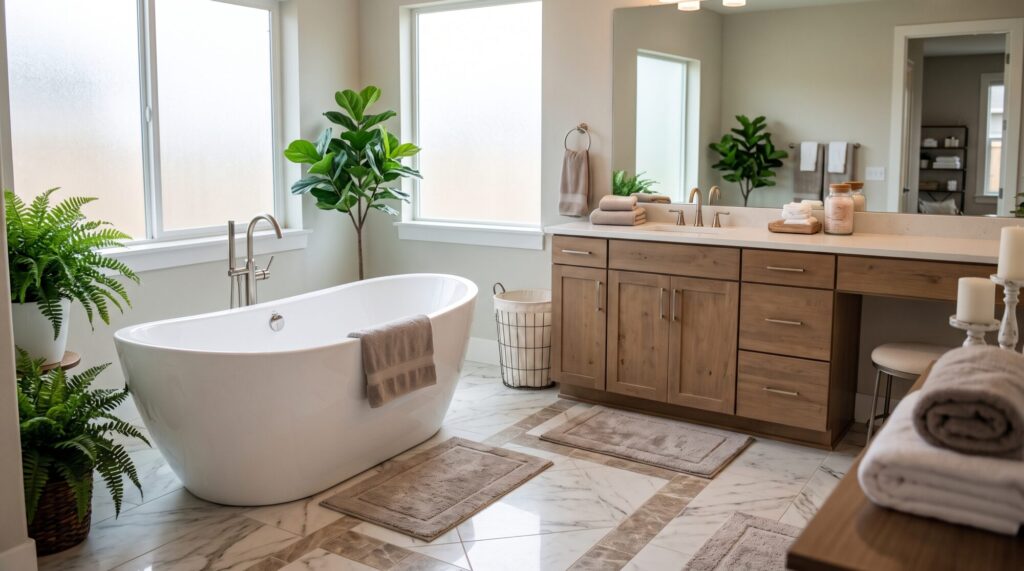
Freestanding tubs
Freestanding tubs stand on their own, away from walls, and are often the focal point of a primary bathroom.
- Best for: Larger bathrooms with open floor space
- Pros: Striking design, many shapes and materials
- Considerations: Need clearance on all sides, a floor mounted or wall mounted tub filler, and planning for cleaning around the tub
Alcove tubs
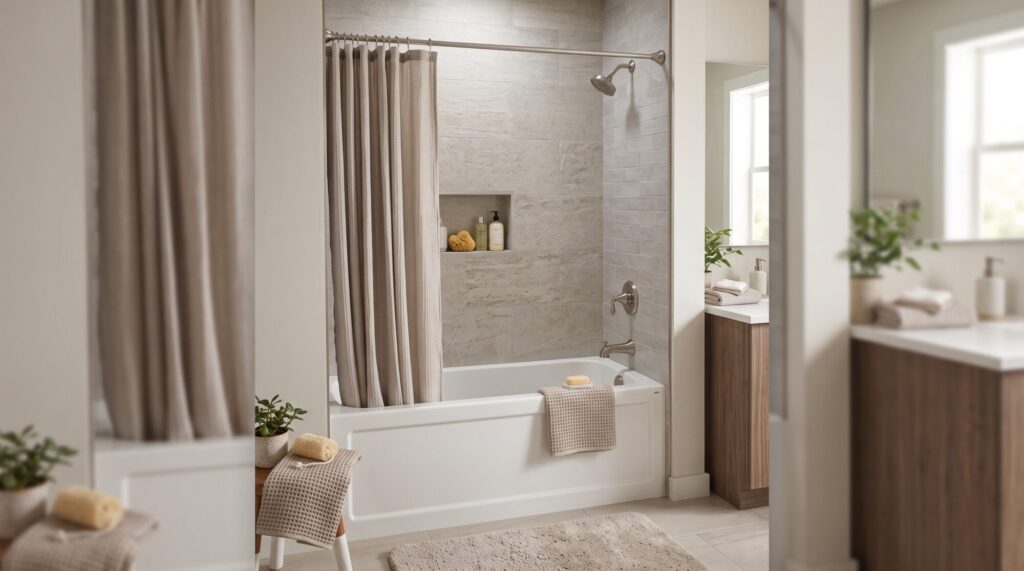
Alcove tubs fit between three walls and are the most space efficient option.
- Best for: Smaller bathrooms or tub and shower combinations
- Pros: Efficient use of space, easy to pair with a shower
- Considerations: Less dramatic visually
Drop-in and undermount tubs
Drop-in tubs sit inside a framed deck, while undermount tubs are installed beneath a deck surface for a seamless edge.
- Best for: Homeowners who want a built-in look with ledge space
- Pros: Space for candles, plants, or bath products
- Considerations: The deck takes up floor space and adds tile or stone work
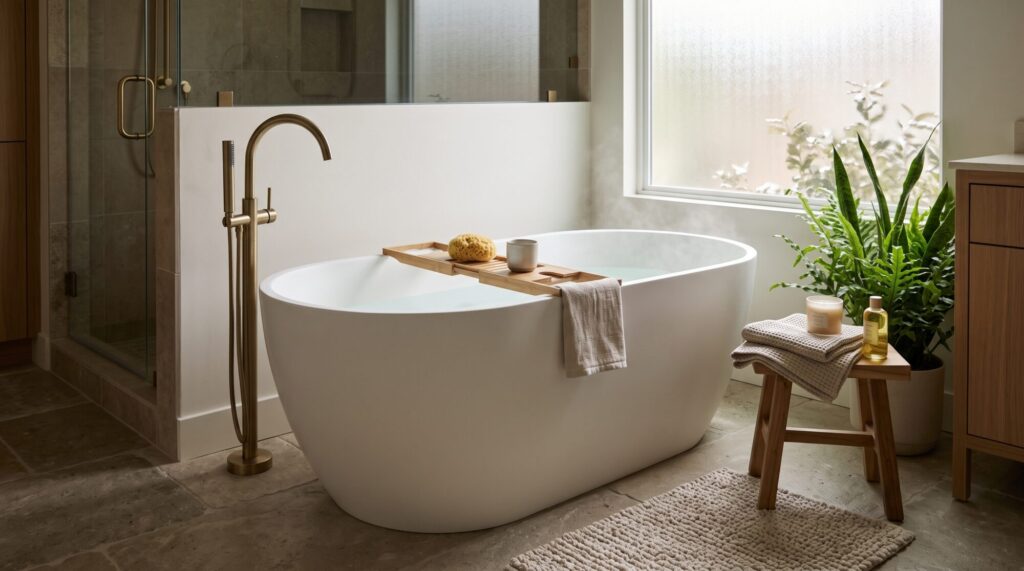
Soaking tubs
Soaking tubs are deeper than standard tubs, allowing full body immersion. They come in freestanding, alcove, and drop-in styles.
- Best for: Homeowners who regularly take baths
- Pros: Comfort and relaxation
- Considerations: Require more water and may need a larger water heater
Clawfoot and pedestal tubs
Clawfoot and pedestal styles suit traditional and vintage inspired bathrooms, especially in older homes.
Corner tubs
Corner tubs fit into a corner of the room. They were popular in past decades and are often replaced during primary bath remodels with a more efficient layout.
Tub materials
| Material | Characteristics |
|---|---|
| Acrylic | Lightweight, warm to the touch, many shapes |
| Cast iron | Very durable and heat retaining, very heavy |
| Stone resin | Solid, high end look, heavy |
| Enameled steel | Durable surface, lighter than cast iron |
| Fiberglass | Lightweight, less durable over time |
Heavy materials like cast iron and stone resin may require floor reinforcement, especially on upper floors.
Should you keep a tub in your primary bathroom?
Many homeowners replace an unused tub with a larger walk-in shower. Others combine both in a wet room. If your home has no other tub, consider keeping one somewhere for bathing children and for future buyers. Your lifestyle and plans for the home should guide the decision.
Planning details
- Water heater capacity: Large soaking tubs may require more hot water.
- Floor structure: Heavy tubs may need reinforcement.
- Tub filler location: Plan plumbing for floor mounted, wall mounted, or deck mounted fillers.
- Access: Ensure there is room for safe entry and exit, especially for aging in place.
Volpe Design Build and primary bathroom remodeling
Volpe Design Build is a design-build remodeling company serving homeowners across Montgomery, Chester, and Bucks County. Our team designs and builds bathrooms, kitchens, and home additions, helping homeowners choose fixtures and layouts that fit how they live.
Frequently asked questions
Is a freestanding tub worth it? A freestanding tub is worth it if you have the space and enjoy baths. It creates a strong focal point but requires clearance and careful plumbing placement.
What is the difference between a soaking tub and a regular tub? A soaking tub is deeper, allowing water to cover more of the body for relaxation.
Do I need to reinforce my floor for a cast iron tub? Possibly. Cast iron and stone resin tubs are heavy when filled, so a structural evaluation is recommended, especially on upper floors.
Does removing a tub hurt resale value? Removing a tub from the primary bathroom is common. Many buyers still want at least one tub in the home, so consider keeping one elsewhere.
Can I have both a tub and a walk-in shower? Yes. Many primary bathrooms include both, sometimes in a combined wet room behind glass.
Plan your primary bathroom with Volpe Design Build
Choosing the right tub is easier with an experienced design team. Call (610) 539-6730 or visit volpedesignbuild.com to schedule your design consultation.