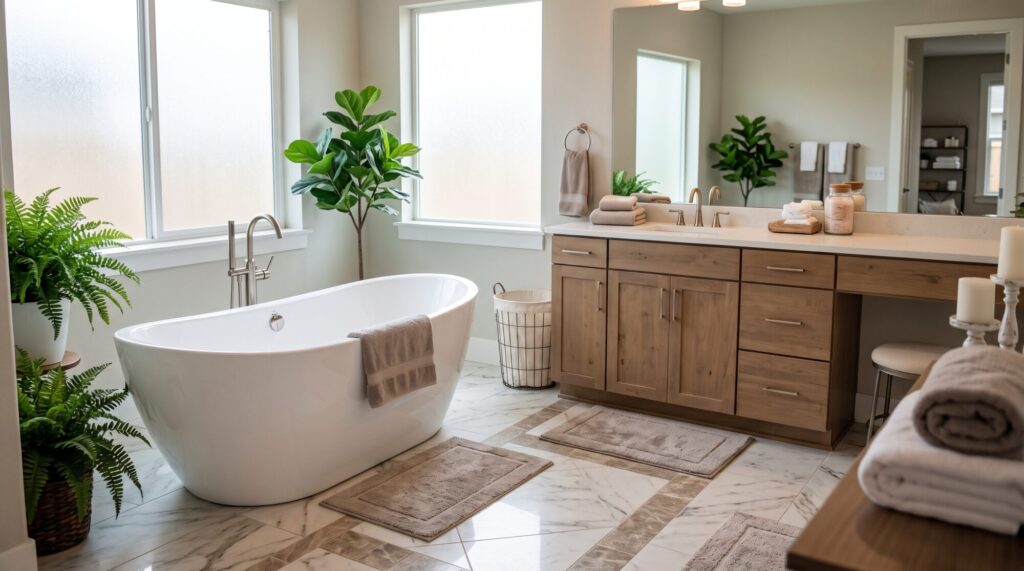

There’s nothing worse than getting out of the shower and standing on a cold tile floor. It’s one of the top reasons homeowners hesitate on tile or stone bathroom flooring: it gets cold in the winter. The invention of radiant floor heating solved that problem, making it possible for anyone to have a warm bathroom floor no matter how cold it gets outside.
Bathroom floor heating is a popular and comfortable upgrade, especially in colder climates like Southeastern Pennsylvania. It involves installing a radiant heating system beneath the floor to provide warmth, and it commonly happens during a bathroom renovation.
An electric radiant bathroom floor heating system consists of a heating element embedded in a mat that’s installed directly underneath the floor tiles. The mats themselves are easy to install, though we recommend professional installation because of the electrical component involved.
What Flooring Works With Heated Bathroom Floors?
You may think a heated bathroom floor limits you to ceramic or tile. Ceramic and tile are by far the best flooring choices for radiant heat, since they conduct warmth so efficiently, but several other flooring types work too, including wood, vinyl, low pile carpet, and laminate flooring.
Are Heated Bathroom Floors Worth It?
It depends largely on your budget and personal preference, but yes, heated bathroom floors are worth the investment for most homeowners. They can increase the resale value of your home and are energy efficient. In Southeastern PA, where winters get cold, heated bathroom flooring adds supplemental warmth to a room that’s otherwise one of the chilliest in the house. More importantly, perhaps, it adds a sense of everyday luxury to your bathroom routine.
Pros and Cons of Heated Bathroom Floors
Pros of Bathroom Floor Heating
- Comfort. The warmth radiating from the floor creates a cozy feeling underfoot, especially during colder months.
- Energy efficiency. Radiant heating systems are generally considered energy efficient because they heat the floor and the surrounding area directly, avoiding the heat loss that comes with ducted systems.
- Space saving. Since the system is installed beneath the floor, it doesn’t take up any additional space in the bathroom the way a radiator or vent would.
Cons of Bathroom Floor Heating
- Best done during a renovation. Installing heated flooring requires removing your existing floor down to the subfloor to place the electric mat, so it’s most practical as part of a bathroom remodel rather than a standalone upgrade.
- Professional installation recommended. Some systems can technically be installed yourself, but it’s best to hire a professional experienced with heated bathroom flooring, especially given the electrical work involved.
- Flooring compatibility. Not all flooring materials support heated floors. Check with the manufacturer to confirm the flooring material you want is compatible with the heating system.
- Upfront cost. A heated bathroom floor generally costs more upfront than a standard flooring installation, though the comfort, efficiency, and resale value it adds help offset that cost over time.
Bathroom Heated Flooring: The Bottom Line
Bathroom floor heating is a modern upgrade that gives you a warm bathroom floor every morning. Easily installed during a bathroom remodel, it provides comfort and energy efficiency, and it’s space saving since there’s no need for vents or a radiator. It increases the value of your home and, over time, pays for itself.
Heated Flooring Installers Near You
The design and build firm at Volpe Enterprises, Inc. installs bathroom floor heating as an option for your bathroom remodel. Located in Southeastern Pennsylvania, we remodel bathrooms throughout Chester and Montgomery County. Talk to us today about having your bathroom remodeled with heated flooring.