A whole-house renovation is a different scale of decision than a single kitchen or bathroom project. When multiple rooms, systems, and often the home’s entire layout are being reimagined at once, the way you structure the project, who designs it, who prices it, and who builds it, has an outsized effect on whether the result matches the vision and the budget matches the estimate. This guide looks specifically at how a design build firm vs general contractor approach plays out on a full home remodel, where the stakes and the coordination challenges are highest.
Why the Delivery Model Matters More on a Whole-House Project
On a single-room renovation, the gap between a design-build approach and a traditional architect-plus-contractor model is meaningful but contained. On a whole-house renovation, that gap compounds. A kitchen redesign affects adjacent living space sightlines. A primary suite expansion affects the home’s structural framing. A basement finish affects the mechanical systems serving the floors above it. When every room is being touched, the number of decisions that ripple into other rooms multiplies, and that’s exactly where having one team managing the entire vision, rather than coordinating separate designers and contractors room by room, becomes the difference between a cohesive home and a house that feels like several unrelated projects stitched together.
How Each Model Handles a Full Home Remodel
Traditional general contractor model. An architect or designer creates a complete set of whole-home drawings first. Once finished, those drawings go out for contractor bids. Because a whole-house renovation touches so many systems, this design phase alone often takes months, and if the resulting bid comes in over budget, which is common on large-scope projects, some or all of the design has to be revisited before construction can start.
Design-build model. Design and budget are developed together from the first conversation, room by room and system by system, with pricing built in as the vision takes shape rather than revealed only after drawings are finished. For a whole-house project, this means major cost drivers, a primary suite addition, a kitchen layout change, basement egress requirements, are all understood and budgeted early, rather than surfacing as a shock once a full bid comes back.
Cost Predictability on a Whole-Home Scale
Full home remodel cost in Pennsylvania varies enormously depending on scope, but the real risk on a whole-house project isn’t the total number, it’s the number changing significantly after you’ve already committed emotionally and financially to a design. In a traditional model, a whole-home bid coming in over budget after months of design work often forces difficult, rushed decisions: cutting scope, downgrading materials, or absorbing the overage. In a design-build model, because pricing develops alongside design, those trade-offs get made earlier and more deliberately, when there’s still room to adjust the plan rather than scramble to save the budget.
Timeline and Coordination Across Multiple Rooms
A whole-house renovation typically involves more trades working in sequence and in parallel than a single-room project, framers, electricians, plumbers, HVAC technicians, tile setters, and finish carpenters, often across several rooms simultaneously. In a traditional model, the general contractor is coordinating all of this, but wasn’t part of the original design decisions, which can create friction when a detail that looked fine on paper turns out to be difficult to sequence or build. In a design-build model, the same team that made the design decisions is scheduling and managing the trades, which tends to reduce the number of “who decided this” conversations mid-project.
When a Traditional General Contractor Still Makes Sense
If you already have a completed, whole-home architectural drawing set and specifically want to shop that exact scope to multiple contractors for competitive bidding, a traditional general contractor model remains a reasonable choice. This is less common for whole-house renovations than for smaller, well-defined projects, since full-home scope tends to benefit from the kind of iterative, budget-aware design process that design-build is built around, but it’s a legitimate path for homeowners who’ve already done extensive design work independently.
When Design-Build Makes the Most Sense for a Whole-Home Project
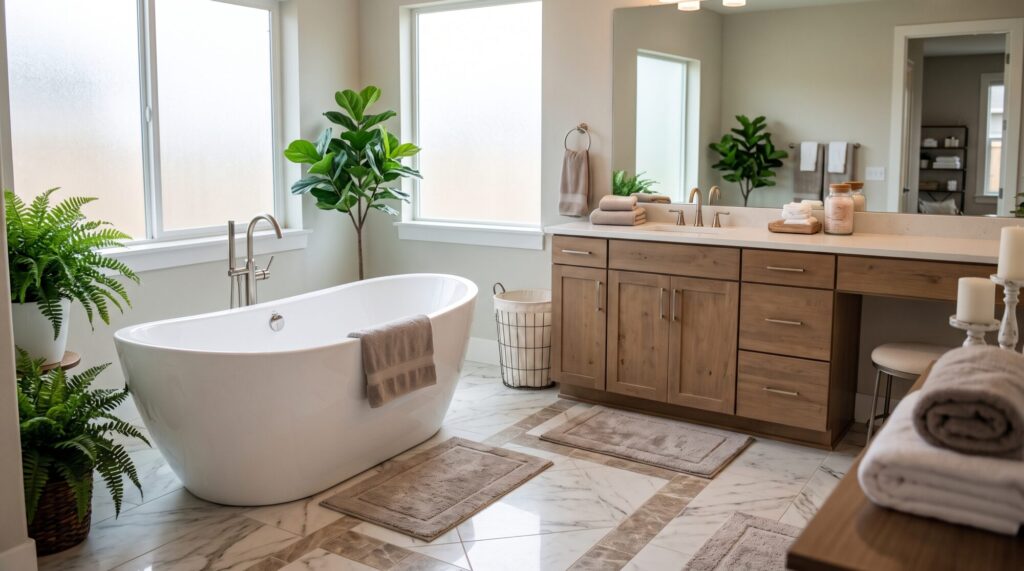
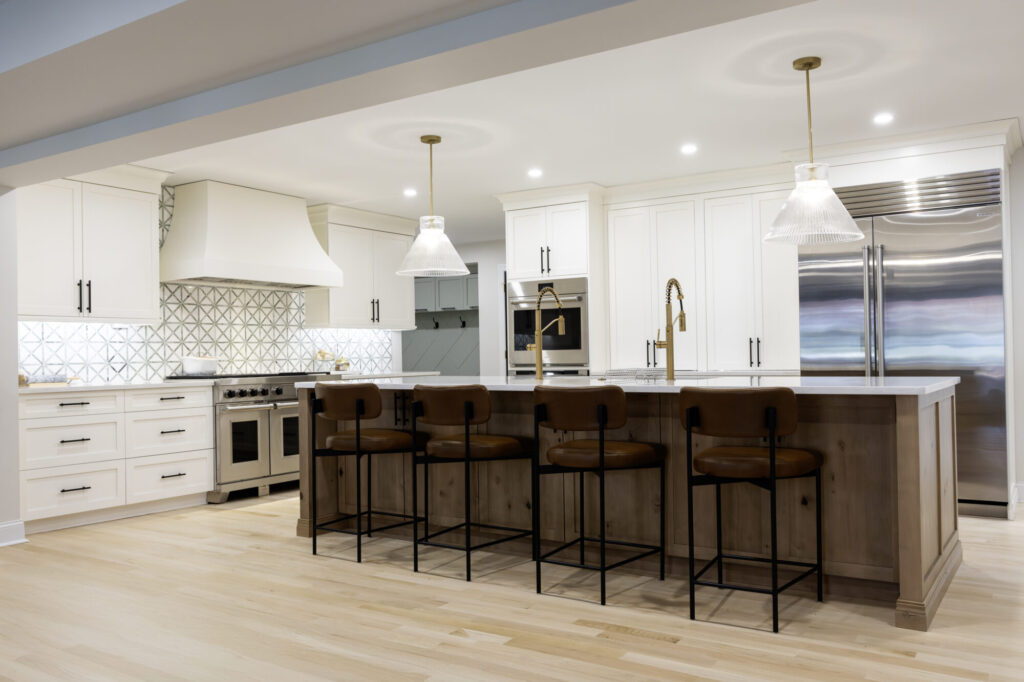
Design-build tends to be the stronger fit specifically when the full scope isn’t fully defined yet, when budget needs to inform design decisions as they’re made rather than after, and when you want one team accountable for how a kitchen renovation, a primary suite expansion, and a basement finish all work together as one coherent home rather than three separate projects sharing a mailing address.
Frequently Asked Questions
Is design-build more expensive than a general contractor for a whole-house renovation? Not inherently. Design-build often reduces the risk of a large budget overrun specifically because pricing is developed alongside design from the start, whereas a traditional whole-home bid coming in over budget after months of design work is one of the most common and costly surprises on large-scope projects.
How long does a whole-house renovation take with a design-build firm? Timelines vary significantly by scope, but design-build often compresses the overall timeline compared to a traditional model, since design, permitting, and early construction planning can overlap rather than proceeding in strict sequence.
Can a design-build firm handle a renovation touching every room in the house? Yes. This is precisely the scale of project where design-build’s single-team coordination provides the most value, since decisions in one room frequently affect structural, electrical, or plumbing considerations in another.
What’s the biggest risk of using a general contractor for a full home remodel? The most common risk is a completed whole-home design that comes back over budget once bid, forcing scope cuts or material downgrades after significant time and design fees have already been invested.
Comparing Options for a Major Renovation?
A whole-house renovation is one of the biggest financial and logistical decisions a homeowner makes, which is exactly why the delivery model matters as much as the design itself.
Comparing options for a major renovation? Contact us to discuss our seamless Design-Build process.